Part 1: The Evolution of Zero Trust Architecture
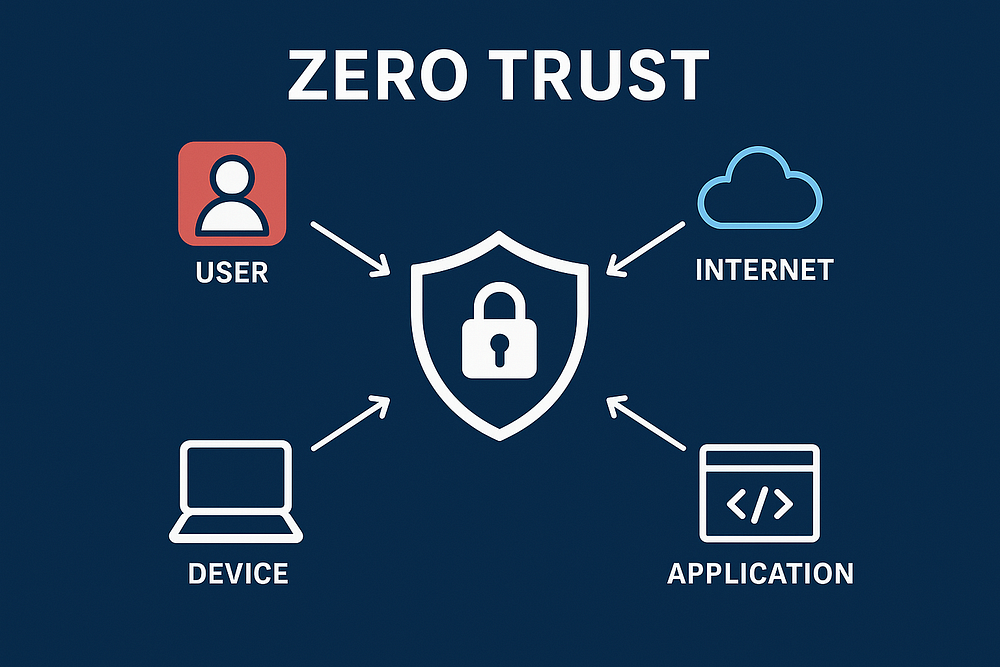
Introduction
Cybersecurity is an ever-evolving field which adapts to the way people use technology. As technology advances, the need for new practices to safeguard sensitive information, business operations, and personal data increases.
In earlier times, data primarily stayed within company servers. So the perimeter security model — built on firewalls, VPNs, and internal networks — was considered sufficient. It worked well for closed environments where digital assets were inside the corporate boundary.
However, the digital landscape has been changing. Cloud computing, mobile devices, third-party integrations, and increasing threats have blurred those boundaries. Traditional approaches to security are no longer enough to handle these complexities.
This shift has given rise to Zero Trust Architecture (ZTA), a modern security model built on the principle of "never trust, always verify."
Why Perimeter Security Fell Short
The core principle of the perimeter model (also known as the castle-and-moat approach) is:
"Anything inside the network is safe."
It's like locking the front door but leaving every room inside wide open — a principle that doesn't hold up in today's IT environments. Nowadays, new technologies are borderless:
- Cloud computing has moved data outside physical servers.
- Remote work means employees log in from anywhere.
- Mobile and IoT devices bring new and unmanaged entry points.
- Third-party integrations expand the attack surface.
- Sophisticated cyber threats exploit trust placed inside networks.
This means that once attackers bypass the firewall, they often have free lateral movement across the entire system. This is why traditional "castle-and-moat" security no longer works.
The Rise of Zero Trust
These limitations of perimeter security led to a new approach: Zero Trust Architecture (ZTA). Unlike older models, Zero Trust does not assume internal traffic is safe. Its principle is simple but powerful:
"Never trust, always verify."
This model enforces:
- Strict identity verification for every user and device, regardless of whether they're inside or outside the network boundary.
- Least privilege access, ensuring users only get what they truly need.
- Continuous monitoring, instead of one-time authentication.
Whether the request comes from inside the office or a remote laptop, Zero Trust demands proof before granting access.
Conclusion
Cybersecurity isn't just about technology; it's about trust. Businesses can no longer rely on walls; they need security that adapts to how work actually happens. Zero Trust provides resilience in a world where perimeters are blurred, threats are constant, and data is everywhere.
The journey from perimeter security to Zero Trust shows how cybersecurity emerged alongside technology itself. The "moat and castle" mindset may have defined the past, but the future is clear: Zero Trust is not optional anymore — it's essential.